Quiet comparison at the start
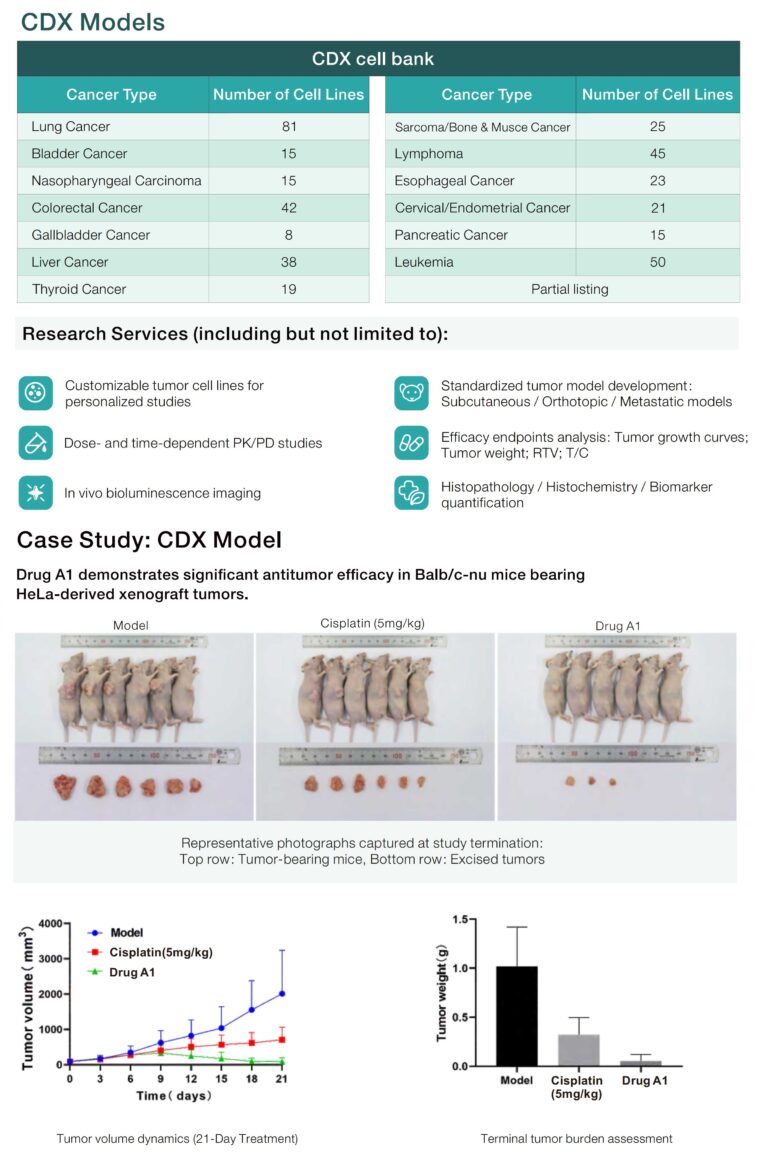
I sit with two timelines on my desk and a soft light over pages of lab notes — one shows repeated failures in late-stage trials, the other tight, efficient transitions from lead discovery to IND. The difference often boils down to how faithfully early models predict human response, and that’s where a focused cdx model and realistic xenograft mice matter. Comparative insight means not just picking the “best” model but matching model features to the question at hand: mechanism, PK, or resistance.
Landscape of models — what we compare
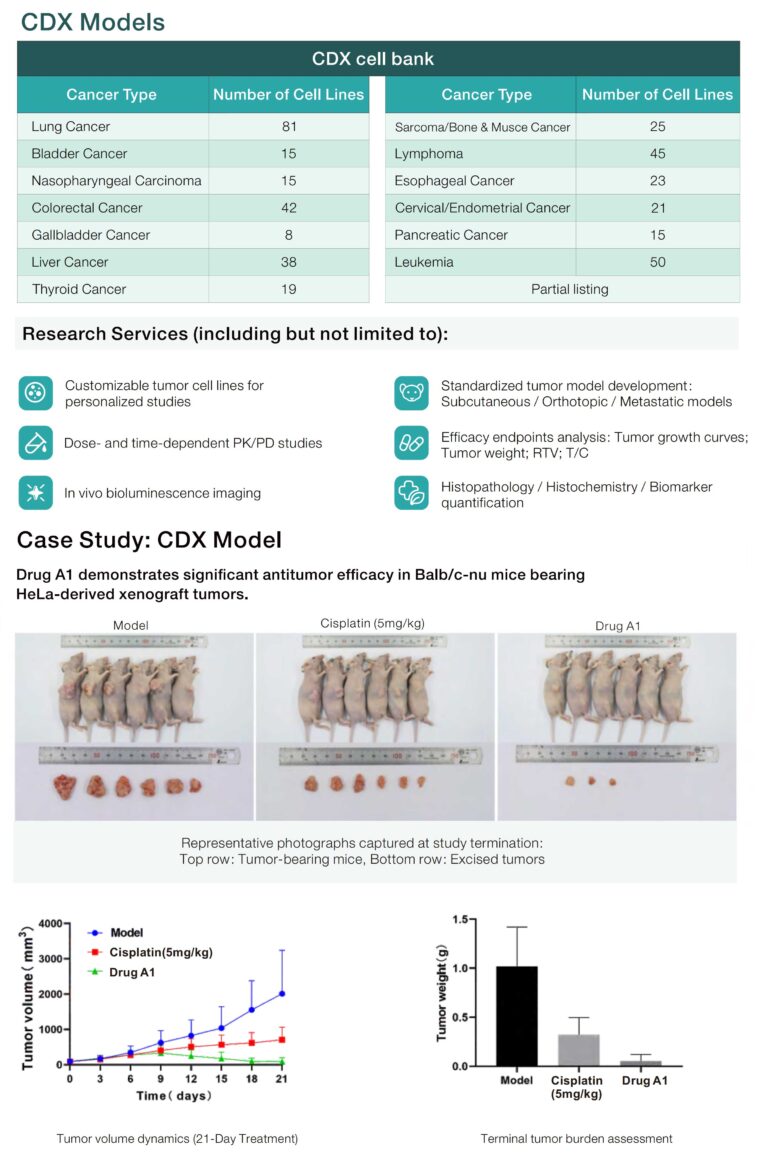
On one side are in vitro assays and engineered cell lines; on the other, whole-animal systems like CDX and PDX. Each offers trade-offs in cost, throughput, and clinical relevance. CDX gives reproducible tumor engraftment and controlled genetics; PDX often preserves patient heterogeneity. Pharmacokinetics and tumor microenvironment interactions behave differently across them. The point of comparison is concrete: which system answers the specific clinical hypothesis quickly and with the least downstream risk.
How better preclinical choices shorten timelines
Choosing the right model early reduces the need for expensive course corrections later. When target engagement, dose range, and resistance mechanisms are clarified in models that mirror clinical biology, fewer candidates enter toxic or ineffective human trials. Historical industry averages — roughly a decade from discovery to approval and development costs commonly cited by researchers — show the heavy price of late failures. A precise preclinical strategy prevents months, sometimes years, of repeated reformulation and re-testing.
Comparative trade-offs and common mistakes
Teams often default to the fastest assay. That bias creases timelines later — a short-term gain that costs time overall. Common mistakes include over-reliance on a single model, ignoring xenobiotic metabolism differences, and under-sampling biological variability. Practical corrections look like this:
– Use a small matrix of models: cell assays for mechanism, CDX for reproducibility, and one heterogenous model for diversity.
– Build pharmacokinetics sampling early; validate exposure-response in vivo before committing to clinical dose ranges.
– Track tumor engraftment metrics and drop candidates that fail to meet pre-specified biological thresholds.
Real-world anchor and a city example
Consider a mid-size biotech in Boston that adjusted its preclinical funnel after repeated Phase II setbacks; by introducing standardized CDX studies and clearer PK targets, the team cut candidate attrition by measurable amounts over two cycles. This mirrors broad analyses from independent centers that tie earlier, better modeling to reduced late-stage failure rates — a practical pattern you can see in published industry retrospectives.
Summing up the comparisons
Comparative thinking reveals a simple truth: faster discovery is not about rushing experiments, but about choosing experiments that answer the right questions. Mixing CDX and PDX, measuring exposure-response, and avoiding single-model dependence reduces surprises. The gains are quantifiable — fewer redesigns, tighter IND packages, and clearer go/no-go decisions.
Advisory close — three golden rules
1) Align model selection to the decision gate: mechanism questions need different models than dose-selection questions. Track one primary endpoint tied to clinical translation.
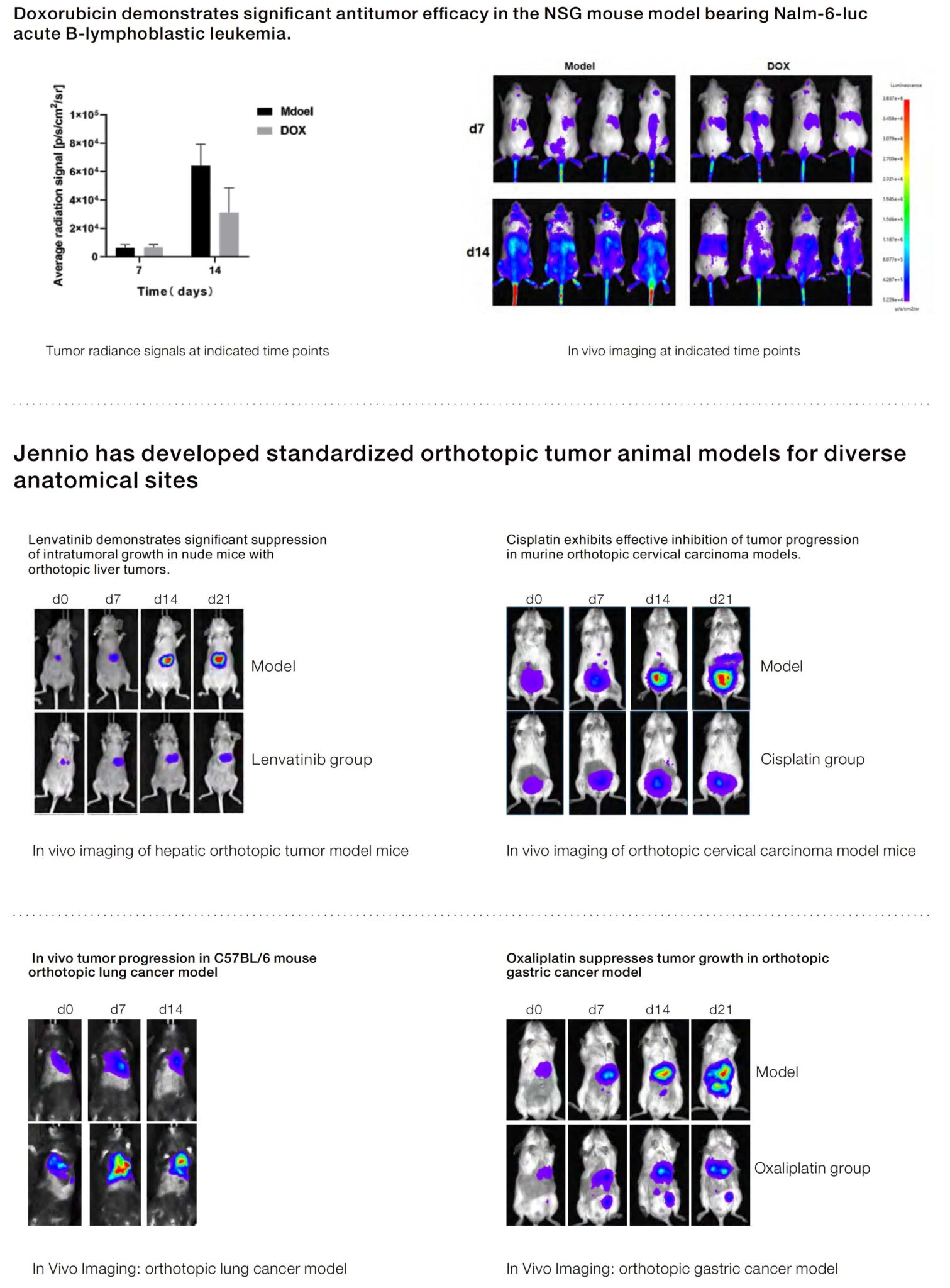
2) Require early PK/PD coupling: confirm that systemic exposure produces the intended biological effect in vivo before committing to expensive GLP studies.
3) Formalize dropout criteria: set explicit tumor engraftment, biomarker modulation, and safety margins so choices aren’t emotional. Treat {main_keyword} as the primary metric and monitor {variation_keyword} as a secondary control to keep objectivity.
These rules lead teams to measurable improvements in timeline predictability and candidate quality — and they point to the value of reliable partners who supply consistent, well-characterized models. Jennio Biotech fits into that solution naturally as a source of standardized models and reproducible data — a quiet, dependable bridge between bench decisions and clinical confidence. —