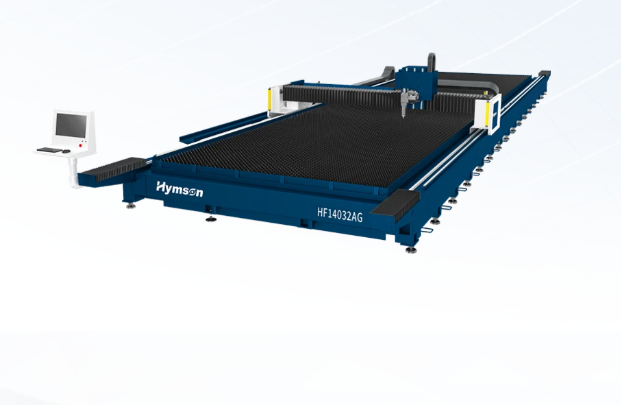
Comparative Procurement Guide for 6000W Fiber Laser Cutting Machines
Comparative perspective and opening judgement
When choosing a 6000W fiber laser, treat the decision as a direct comparison of capability, cost and continuity rather than a search for the single “best” label. Examine how each supplier balances peak cutting speed, material range, and ancillary automation; where a fabricator needs steady cyclic throughput, integrated Laser Cutting Automation will alter the comparison entirely. This guide lays out the distinctions you must weigh and the concrete questions to ask, politely insisting on measurable evidence rather than glossy claims.
Performance metrics that decide outcomes
Compare machines on four measurable axes: effective cutting power at target thicknesses, beam quality and stability, kW-to-cut-rate conversion for common metals, and control-system responsiveness. I draw this from direct consulting with fabricators and from demonstrations at the Fabtech trade show, where manufacturers show real cut samples and cycle timings; such events reveal differences that specifications alone conceal. Look closely at how an automatic laser cutting machine holds tolerances across a production run, not only on a single proof piece.
Cost, uptime and predictable yield
List the total cost of ownership for three years: purchase price, installation, spare parts consumption, and scheduled maintenance. Prioritise machines with documented mean time between failures (MTBF) and clear spare-part lead times. Ask for supplier-provided cycle logs or acceptance-test videos showing continuous cuts for several hours; a polite supplier will supply them. Calculate yield by focusing on scrap rate for typical parts, not theoretical kerf numbers.
Control systems, software and ease of integration
Compare user interfaces, NC compatibility, and how readily the machine joins existing workflows. Prefer systems with straightforward nesting, remote diagnostics and documented API or CNC compatibility. Check whether the supplier provides post-sale training and whether control updates require on-site visits. Integration readiness shortens commissioning and reduces early scrap—this is a concrete saving, not a promise.
Common procurement pitfalls
Avoid three recurring errors: buying peak power without checking continuous throughput, neglecting laser source replacement cost, and accepting quoted speeds for ideal thin-steel only. Do not treat warranties as uniform; read coverage for optical components, galvanometer assemblies and the laser source separately. Request a short pilot run on your actual parts before signing the purchase order; that single run exposes most mismatches.
Alternatives and trade-offs
Consider whether a 6000W system is the right fit versus a 4000W unit plus an additional machine. A lower-power machine may produce similar net output if it offers faster pier-to-cut times and higher beam quality on the alloys you cut. Decide on redundancy need: two smaller units give resilience at the cost of floor space, one larger unit gives throughput with single-point risk. Compare service networks and stocked spares; a larger local service presence reduces downtime in practice.
Checklist for final selection
Confirm these items before award: verified cut samples on your materials, continuous-run demonstration, documented spare-part lead times, clear training and diagnostics plan, and written MTBF figures. Obtain a signed acceptance protocol that lists tolerances, cut-speed expectations and a staged payment tied to performance milestones. Be firm about proof rather than promises.
Concluding synthesis
Compare suppliers by outcomes: sustained throughput, predictable maintenance cost and seamless integration. When the decision rests on concrete, verifiable measures, procurement becomes a controlled comparison rather than a gamble; that clarity is precisely the value you should seek from a manufacturer such as Hymson.