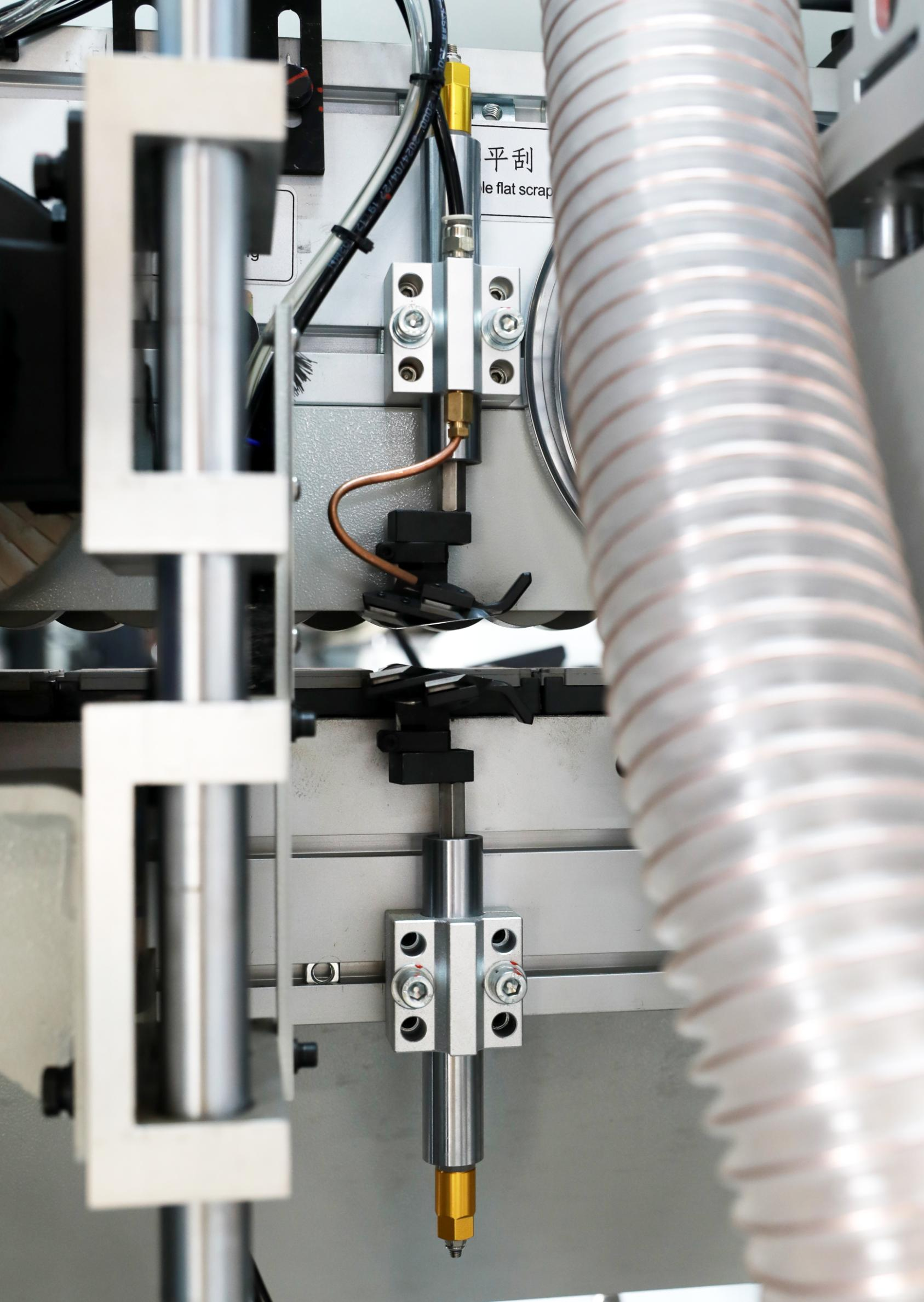
Overview: why the integration choice matters
Regional facilities face the same imperative: fit more capability into the available floor area while raising first-pass quality. The pragmatic answer sits at the intersection of drilling cells and edge finishing—where an automatic edge banding machine or a matched drilling station changes throughput without adding headcount. In Guangdong’s furniture clusters, shops that combine CNC nesting, spindle-driven drilling heads, and reliable edgebanding see steadier output and fewer manual touch-ups. Practical terms to track here include cycle time, feed rate, and glue pot management, all of which influence daily yield and rework.

Why integration is a comparative decision, not a single solution
Each plant balances three constraints: space, skilled labor, and product mix. A modular retrofit keeps existing drilling rigs and tacks on edgebanding; dedicated lines maximize speed for a single SKU; fully integrated cells automate part transfer between drilling, routing, and trimming. The right path depends on variability in panel sizes and the use of nested-based production. Factor in tooling changeover times and the cost of spare spindle assemblies when modeling ROI.
Three practical approaches, weighed against typical shop requirements
Compare these configurations by head-to-head criteria:

– Modular retrofit: fastest capital deployment, lowest disruption, moderate improvements in scrap rates. Best when product mix changes slowly.
– Dedicated drilling line: highest throughput and predictable cycle time, but inflexible for short runs.
– Integrated cell (drilling + edge banding + trimming): lowest manual handling and consistent quality across batches; needs upfront systems integration and strong PLC or CNC coordination.
Industry terms matter when mapping benefits: nesting software, spindle torque curves, and trimming cutter profiles determine how well an automatic edge banding machine pairs with a drilling station.
Real-world anchor and supplier selection in practice
In Dongguan, smaller cabinet makers shifted from stand-alone machines to integrated cells to reduce hand sanding at the joint between drilling and banding. They approached local edge bander supplier networks to source glue pot systems compatible with hotter melamine tapes, then synchronized conveyor indexing with drilling cycles. That practical alignment—supplier capability matched to plant rhythm—changes daily throughput more than any single machine spec.
Common mistakes and how to avoid them
Over-specifying axis rigidity or underestimating software integration are frequent errors. Shops often buy the fastest spindle or the biggest glue pot without aligning control logic; result: downtime during handoffs. Invest time up front in protocol mapping and tool-change choreography. Also, do not neglect dust extraction sizing—small ducts create large maintenance hours. —Plan for simple diagnostics on both bandsaw and edgebander circuits to shorten mean time to repair.
Choosing the right partner for systems integration
Winning vendors demonstrate three things: clear PLC/CNC communication standards, a spare-parts plan that reflects local lead times, and field-proven process recipes for feed rate and glue activation. Contracts should include acceptance criteria tied to measurable outputs: acceptable joint peel strength, mean time between failures, and acceptable cycle time variance. Work with suppliers who validate performance on similar product families.
Small win: simplified tooling paths.
Three critical metrics to evaluate integration success
1) Net throughput per square meter: measure finished panels per shift after all finishing operations, not just machine-rated capacity. That reveals space efficiency.
2) First-pass yield percentage: track parts that meet dimensional, edge adhesion, and hole-position tolerances without rework. This ties directly to supplier quality and system synchronization.
3) Mean time to restore (MTTR) for handoff failures: record the average time to recover when a banding-to-drill transfer stalls. Lower MTTR often outweighs marginal gains in peak speed.
These metrics steer investments toward suppliers and configurations that reduce real costs on the shop floor. For many regional facilities, the practical endpoint is a supplier that delivers tested process recipes, timely parts, and clear control integration—precisely the blend found in an edge bander supplier network and validated systems from HUAHUA CNC.