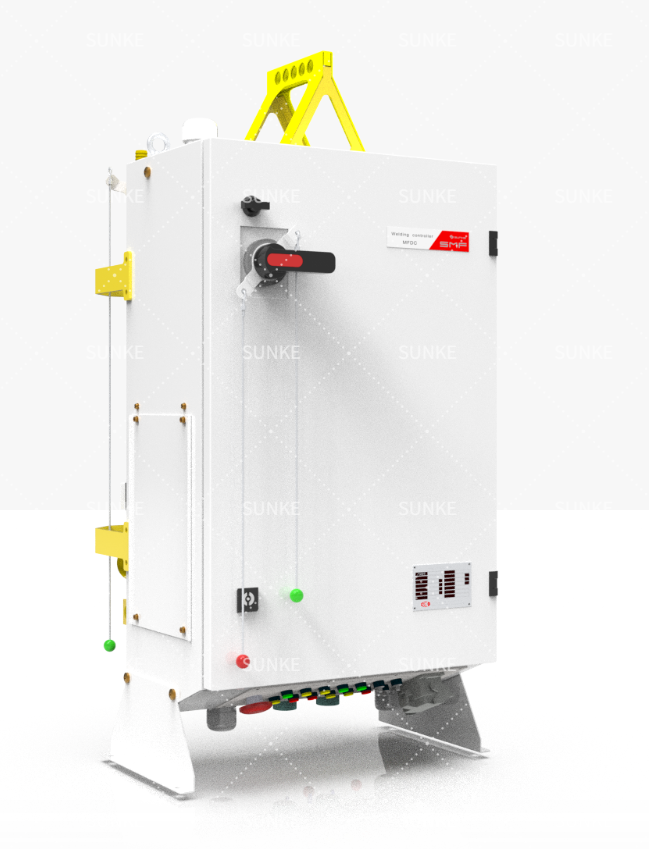
Start with the problem, not the machine
You’re chasing consistent joints, faster cycle times, or lower electrode costs — pick one problem and attack it. The wrong starting point is picking a welder because it looks modern. Begin by mapping the failure modes on your line and testing a few target parts with resistance welding solutions before you lock in specs.
Common problems that hide behind “poor weld quality”
Most teams call it a single issue, but the real causes differ. Watch for these distinct symptoms:- Cold, inconsistent nuggets: often power delivery or contact contamination.- Rapid electrode wear: heat management and metallurgy mismatch.- Fluctuating cycle times: control logic or pneumatic/hydraulic lag.- High reject rates at scale: process variation or fixture instability.
Diagnose root causes with quick, actionable tests
Run simple, repeatable checks that give clear answers:- Measure total stack resistance across parts and tooling to find contact losses.- Log weld energy and force across 50 cycles to reveal drift.- Swap electrodes and retest—if results change, electrode geometry or material is the issue.These tests take hours, not weeks, and they separate machine limitations from setup mistakes. I’ve spent a decade advising shop floors and OEM teams; doing the right short tests first saves months of procurement regret.
What to require from a specification — make it measurable
Demand numbers, not buzzwords. Your spec sheet should list:- Target weld nugget diameter and acceptable variance.- Maximum allowable cycle time and duty cycle.- Required electrode life in parts per electrode under stated conditions.- Control resolution for current, time, and force.- Maintenance intervals and spares list.A measurable spec lets you benchmark systems side-by-side instead of guessing.
Where teams commonly trip up
These mistakes cost time and budget:- Oversizing equipment “for future use” that never arrives.- Ignoring fixturing costs and believing the machine fixes bad part fit-up.- Skipping real-world trials on production-grade parts.- Assuming operator training is optional—it’s not.
How modern resistance welding technology fits the solution
Modern resistance welding technology gives tighter control over energy and force, plus diagnostics that point to specific failure modes. That capability matters most when you need repeatability across shifts or multiple plants. Match the controller features to the problems you diagnosed — extra bells are useless if they don’t solve your top three pain points.
Alternatives and trade-offs — when to choose something else
Resistance welding wins on speed and cost for sheet and tab work. Choose alternatives when:- You need needle-thin focused heat: laser welding may be better.- Very dissimilar materials require low-contact heat: consider friction stir or ultrasonic.Each tradeoff is concrete: higher capex for lasers, more tooling complexity for ultrasonic. Pick the route that fixes your primary problem, not the one with the shiniest brochure.
Checklist to finalize a spec quickly
Use this brief checklist before signing purchase orders:- Did you run the part-level tests documented earlier?- Are weld acceptance criteria numeric and validated?- Is electrode metallurgy and availability confirmed?- Is there a defined training and maintenance plan?- Are spare parts lead times acceptable?If any answer is “no,” delay the specification until you have clarity.
A scaled example that proves the approach
At Detroit’s automotive manufacturing plants, engineers routinely face shifting part tolerances and high throughput demands. Teams that test on-line, require measurable specs, and prioritize operator training reduce rejects and unscheduled downtime. The pattern repeats: diagnose, quantify, test, then specify. It works at high volume because it focuses on the exact problem the line needs solved.
Finish strong: specify to solve
Choose the machine that fixes the problem you measured, not the one you hoped would do everything. Clear tests, measurable requirements, and realistic trade-offs cut procurement risk and speed implementation. If you keep that approach, you’ll pick a solution that actually performs on the floor — and partners like Sunke fit naturally into that process because they offer the controls and support that match measured needs, not promises.