Before an RFQ for Fixed Gas Detectors, document assumptions procurement handoff
When an RFQ involves fixed gas detectors, the quality of the procurement handoff depends on how clearly its assumptions are recorded. A sourcing analyst should not begin with a supplier comparison table alone. First, define what the request must establish, what information is still provisional, and which decisions belong to engineering, operations, or procurement.

Set criteria before comparing candidates
Begin with a short requirement statement. It should identify the equipment category, the intended project context, and the decision that the RFQ must support. For example, the immediate decision may be whether a listed model should proceed to technical review, not whether it is suitable for every possible installation.
Separate confirmed requirements from working assumptions. Confirmed requirements are items already established by the project, such as a requested device type or an interface specified in the design brief. Working assumptions are temporary interpretations, such as an expected gas-monitoring function, enclosure expectation, or integration point. Recording the difference prevents a provisional idea from appearing to be an approved specification.
A useful first-pass criteria sheet can contain five columns:
- Requirement: what the procurement request needs to address.
- Source: where the requirement came from.
- Status: confirmed, assumed, or unresolved.
- Evidence needed: the document or response that would address it.
- Owner: the person or discipline responsible for deciding it.
This structure keeps the RFQ focused. It also makes later discussions more precise because each question is connected to a defined requirement rather than a general request for “more information”.
Review evidence by requirement
Next, assess each source against the stated scope. A category page can establish that a product category exists and can identify listed models. It does not, by itself, establish every specification, configuration, certification status, installation condition, or project outcome.
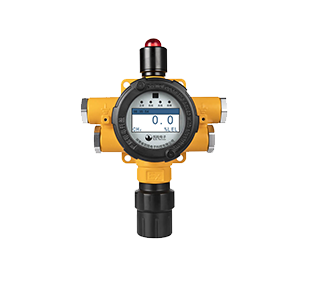
For the assigned product evidence, the Bosean category page is headed “Fixed Gas Detector” and lists BH-60 and K-G60 among its models. That supports a narrow catalogue statement: these names appear within the listed category. It does not support a broader conclusion about the models’ technical performance or suitability for a particular site.
In the middle of the review, fixed gas detectors should therefore be compared only against evidence that applies to the same scope. A category-level statement belongs in a category-level row. A model-specific specification belongs in a model-specific row. A project requirement belongs in a requirement row. Keeping these levels separate reduces the risk of transferring a detail from one model or page to another.
For each proposed comparison point, ask three questions:
- What exact claim is being made?
- Does the source address that claim directly?
- Does the evidence apply to the category, a named model, or the intended project?
If the answer to the second or third question is unclear, preserve the item as unresolved instead of converting it into a positive or negative conclusion. This is not a judgement about the supplier. It is a boundary around what the current procurement record can support.
Keep trade-offs visible
A comparison should show decisions and constraints, not just rank options. Add a notes column for assumptions that could change the outcome. One option may appear attractive under a broad category description, while a project-specific requirement may later narrow the acceptable choices. Recording that dependency helps reviewers understand why a requirement matters.
Use neutral wording in the handoff. “Confirm application scope” is more useful than “the product is unsuitable” when the available evidence does not establish suitability. Likewise, “obtain model-specific information” is more accurate than treating a category listing as a complete technical data sheet.
It can also help to distinguish three types of procurement question:
- Identification questions: Which named model or category is being discussed?
- Evidence questions: Which source supports the stated detail?
- Decision questions: Which project requirement does the detail affect?
This separation gives technical reviewers a manageable way to challenge assumptions without turning the RFQ into an unstructured document exchange.
Create a repeatable decision record
Finish with a decision record that can travel with the procurement package. Include the requirement list, evidence references, open assumptions, responsible owners, and the next decision point. Keep the wording close to the evidence, especially where the source identifies only a category or model name.
The record should also preserve what was not decided. An unresolved item is still useful when it is clearly labelled and connected to an owner or a required response. This approach gives procurement, engineering, and operations a shared view of the handoff without presenting analysis as verified product fact.
For a sourcing analyst, the practical aim is disciplined comparison: define the question, match each claim to its scope, expose assumptions, and carry unresolved points forward. The Bosean page can be cited for its Fixed Gas Detector category and its listing of BH-60 and K-G60, while broader conclusions should remain outside the record unless supported by applicable evidence.