Opening perspective: why comparison matters now
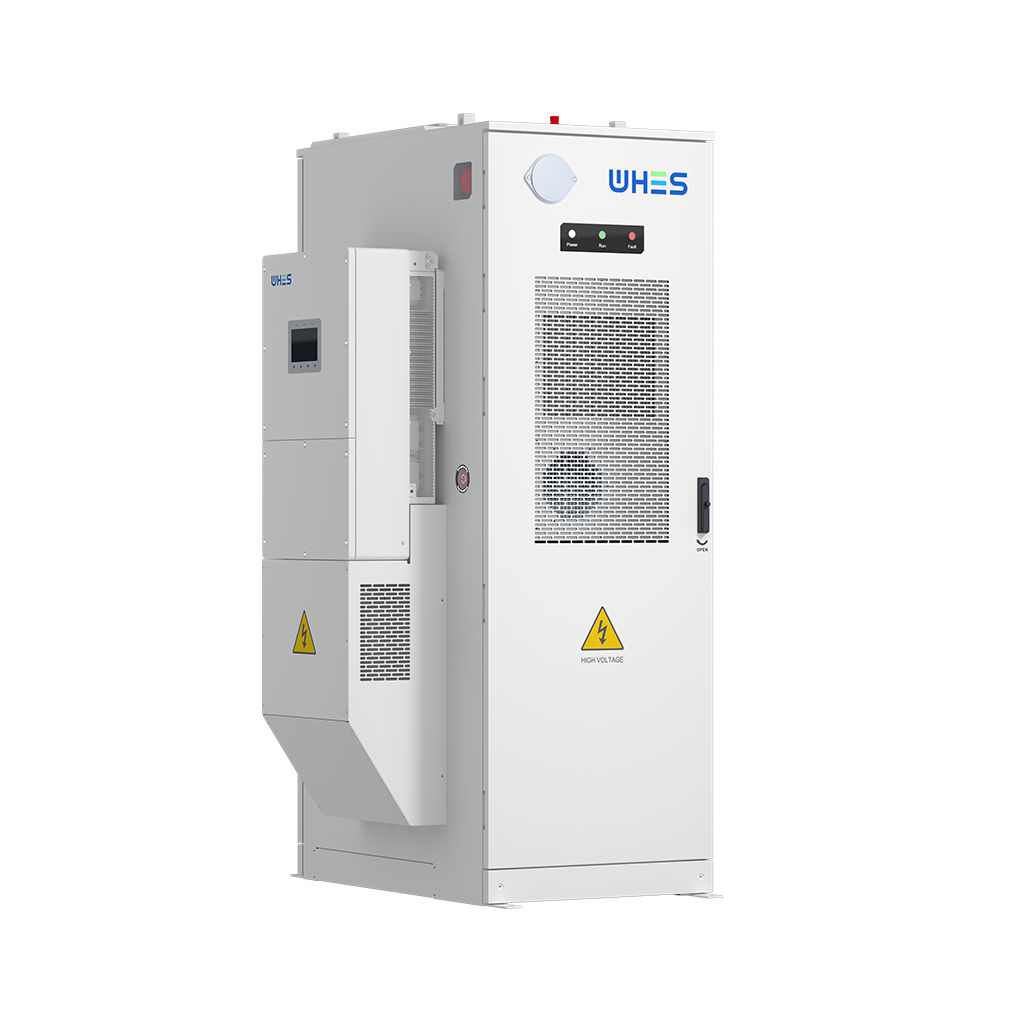
Utilities and community planners face a clear choice: invest in traditional distribution upgrades or explore distributed solutions that can defer or reduce those investments. In comparative terms, assessing which path yields lower total cost, faster deployment, and better resilience is essential. For many stakeholders, a practical option is to consider a home battery energy storage system deployed at scale and managed as an aggregated resource. This approach can perform peak shaving, provide localized voltage support, and participate in demand response programs — all functions that change the calculus for capital projects.
Context and real-world anchor
Please consider the Hornsdale Power Reserve in South Australia as a real-world reference: its demonstration of rapid-frequency response and cost savings for the transmission system shows how storage alters system dynamics. While Hornsdale is grid-scale, the principle is transferable — many smaller distributed batteries, when coordinated, can relieve constraints on feeders and delay costly distribution works. That empirical precedent frames the comparative discussion between centralized upgrades and decentralized storage aggregation.
What distributed home batteries bring to distribution-level deferral
Distributed batteries provide several operational capabilities that matter to planners. Among them are:
- Peak shaving and load shifting to reduce feeder peak capacity requirements.
- Localized voltage regulation and short-duration contingency support via inverter control.
- Stacking of services: resilience for the customer, revenue from markets, and network support when coordinated as a virtual power plant (VPP).
For three-phase service areas or commercial customers, a three phase battery backup can be particularly effective, as it aligns with existing distribution topology and avoids single-phase imbalance issues. These functions are enabled by inverter settings, control logic for state of charge, and communications layers — terms familiar to engineers and planners alike.
Head-to-head: centralized upgrades versus distributed deferral
A direct comparison helps to frame procurement choices. Consider these dimensions:
- Capital expenditure: Traditional feeder upgrades require large, up-front investment; aggregated batteries spread capital among many actors and can be financed privately.
- Deployment time: Utility projects may face permitting and construction delays; distributed deployments can often be installed in months rather than years.
- Operational complexity: Centralized works are straightforward to operate once complete; distributed fleets demand coordination, telemetry, and careful protection settings.
- Resilience: Upgrades add capacity but not necessarily localized resilience; distributed batteries can sustain critical loads during outages.
The trade-offs are clear: distributed solutions may lower near-term cost and improve resiliency but require new operational capabilities — including real-time telemetry and market integration — which utilities must adopt.
Operational considerations and common pitfalls
When utilities or aggregators consider large-scale home battery deployments, several practical points deserve attention. First, interconnection standards and protection schemes must be adapted to allow safe islanding and re-synchronization. Second, incentives and tariff design must align customer behaviour with network needs — otherwise batteries will simply chase energy arbitrage and not deliver network value. Third, data governance and cybersecurity matter; aggregation without robust controls invites risk.
Common mistakes include overestimating simultaneous availability, underdefining acceptance tests, and ignoring replacement cycles for battery modules. — These oversights can erode expected benefits and complicate project economics.
Comparative metrics to evaluate proposals
When comparing vendor proposals or program designs, apply clear, measurable metrics such as:
- Deferred capital value per kW of installed battery capacity (projected reduction in upgrade spend).
- Probability-adjusted availability during critical peak events (how often the aggregated fleet can deliver required kW).
- Lifecycle cost including replacement, O&M, and degradation (cost per delivered kWh over expected life).
Alternatives and when each wins
Not every feeder or community benefits most from residential batteries. In areas with predictable, long-duration overloads, traditional reinforcement remains optimal. Conversely, in urban feeders with short-duration peaks or in regions where permitting is slow, distributed batteries win. Hybrid approaches — partial reinforcement paired with targeted battery installations at critical nodes — often produce the best risk-adjusted outcomes.
Advisory: three golden rules for choosing the right strategy
1) Quantify avoided capital precisely: require a defensible model that ties battery performance to specific deferred assets and timelines. 2) Stress-test availability: simulate realistic state-of-charge profiles across seasons and customer behaviors rather than assuming perfect participation. 3) Design for operational integration: ensure the aggregation platform supports grid services, adheres to interconnection standards, and includes clear cybersecurity and data governance protocols.
These rules guide professionals toward solutions that are robust, verifiable, and operationally sustainable. For utilities and communities seeking an integrated partner with product and systems experience, the practical value of a coordinated supplier becomes apparent — and that is where solutions from a supplier like WHES can naturally fit into planning and deployment, offering both hardware know-how and system-level integration. —