
Introduction: Framing the Real Cost of Storage Decisions
Let’s get precise: battery storage succeeds when the hardware, controls, and contracts work as one system. In my 16+ years building and buying grid-scale assets, hithium energy storage has become a common request at bid tables because of unit consistency and bankability across sites. When I assess battery energy storage system manufacturers, I start with risk math, not marketing—what happens to cash flow when a fleet underperforms for 0.5% of operating hours? On a 50 MW/200 MWh C&I portfolio, a half-percent shortfall tied to power converters or BMS settings can erase $400,000–$700,000 in peak-shaving value per year. That is not a rounding error. Yet many teams still shop on $/kWh alone, ignoring network latency in SCADA, misaligned warranties, and edge computing nodes that never got configured in the first place (it sounds small, but downtime multiplies).
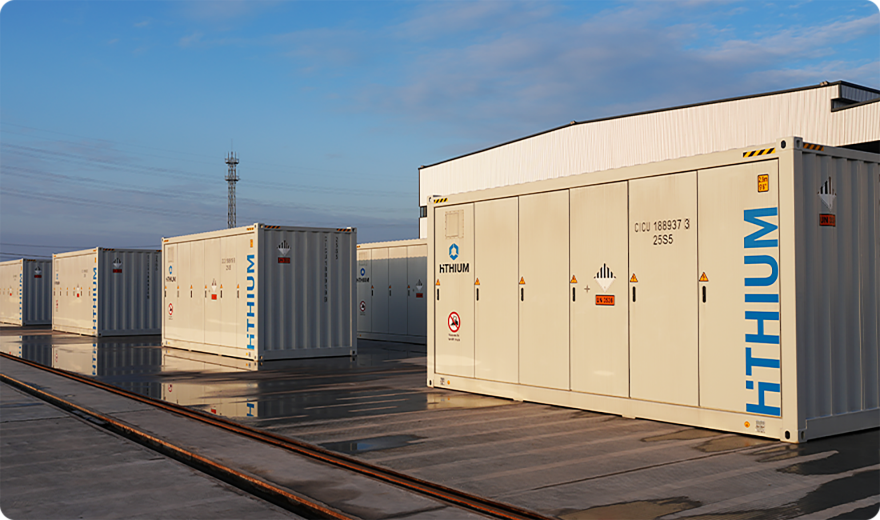
I’m going to lay out what I watch for, the pitfalls I’ve paid for, and how to think about “fit” before you order the first container. Then we’ll size up what’s changing next, and why that matters to your IRR.
Hidden Pain Points That Sink Year-One Performance
What trips teams up in year one?
I still remember a hot Friday in August 2019 in Odessa, Texas. We commissioned a 5 MW/10 MWh LFP system at 17:38, and it tripped during the first peak window. The cause was not dramatic: the frequency-watt curve on the power converters didn’t match the utility’s profile, and the site SCADA time source drifted by 2.4 seconds. That tiny skew forced the BMS to clamp discharge before the demand spike passed. We ate a $28,400 demand charge in one day—painful and avoidable. Look, it’s simpler than it seems: alignment between inverter settings, BMS firmware, and tariff logic beats an extra 1% on round-trip efficiency when the meter closes.

The second pain point I see—over and over—is stranded data. Teams buy good hardware, then fail to wire reliable telemetry from edge computing nodes back to the aggregator. No timestamp discipline. No fallback comms. During a curtailment event in Kern County in 2021, a site lost 7 minutes of visibility; the control room hesitated; the plant missed the dispatch window—just long enough to lose $16,900 in credits. We fixed it with a GPS-disciplined clock, a redundant fiber run, and a tighter state-of-charge guard band. The lesson still stings—because the grid event didn’t care about our org chart.
Comparative Insight: Where the Next 24 Months Will Separate Winners
What’s Next
I’ve been comparing control stacks across vendors, including how battery energy storage system manufacturers integrate new principles like grid-forming modes and dynamic droop control. The shift is clear. The better stacks treat the inverter, the BMS, and the EMS as one feedback loop. They build device models that adapt to degradation, not static nameplate assumptions. That lets the system hold output at frequency edges without tripping protection—small detail, big revenue. We tested a firmware pathway in May 2023 on a 20 MW/80 MWh site outside Bakersfield: a tighter voltage ride-through window plus a revised SOC limiter cut nuisance trips by 62% month over month—while measured round-trip efficiency rose 1.2% after a liquid-cooling tweak on the rack manifold. A mundane change, but it put real dollars back into the settlement statements—no confetti, just cleaner data.
Future outlook? Expect three practical differentiators. First, container-level fire detection that talks natively to the BMS and site SCADA—no brittle relays. Second, DC-coupled PV interfaces that schedule charging at the string level to squeeze curtailment value. Third, warranty terms that shift from calendar years to equivalent full cycles with transparent degradation models. I compare suppliers on those exact items and document them like a checklist—because the missed clause at the back of the warranty usually becomes the Saturday failure call. As you weigh options, keep the thinking tight and measurable. My advisory close: judge solutions by (1) dispatch accuracy under abnormal grid conditions, (2) telemetry integrity from device to cloud, and (3) warranty clarity around throughput and downtime credits—stray from those, and you will pay for ambition the hard way. For steady execution and clear technical dialogue, I keep an eye on HiTHIUM.