Introduction: Where Compliance and Craft Collide
Projects do not fail from big design dreams; they fail in small envelope details. Aluminum Panel is often the hinge on which both aesthetics and liability turn. Picture a mid-rise on a wet, coastal block. The GC is juggling schedule, budget, and a stack of code memos. Envelope nonconformance has a way of multiplying risk—change orders, delays, even rework. In many jurisdictions, façade systems face rigorous fire testing and water management checks, and teams must show clear traceability. So here is the core question: are your panel choices reducing legal exposure, or quietly adding it (one clip at a time)? We aim to make that answer clear, fast, and defensible. Directly.
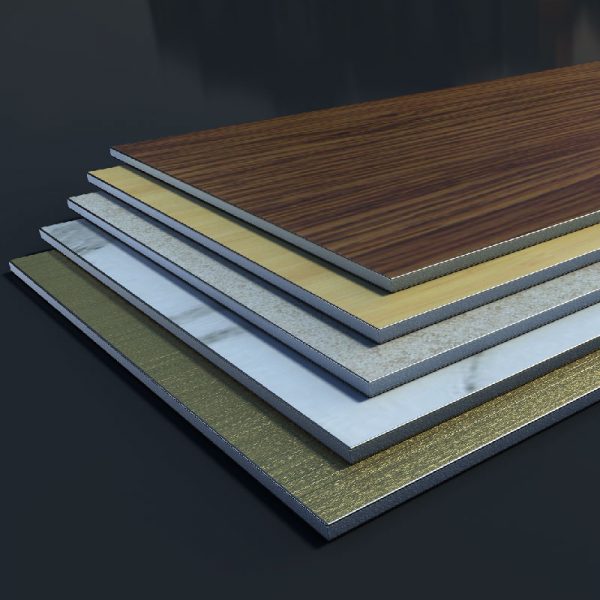
We will contrast methods that look similar from the street but diverge under wind load, thermal expansion, and NFPA 285 requirements. And we will anchor on measurable criteria—rainscreen performance, panel flatness, and lifecycle cost—so decisions stand up in the meeting room and in the field. Let’s move to the specifics.
The Hidden Gap: Why Legacy Skins Still Underperform
What is the real cost of “good enough” façades?
Let’s get technical. Many teams still default to heavier sheet systems or stone lookalikes because they feel familiar. Yet early wins in price can hide long-term loss in tolerance, fastening, and weather control. Consider aluminum clad panels in a pressure-equalized rainscreen. When the subframe lacks thermal breaks, you get heat bridging. When fastening is over-stressed, you get oil-canning. When the cavity is undersized, negative pressure can pull water across joints. This is how “value engineering” becomes value erosion—funny how that works, right? The result is drift in panel flatness, inconsistent sealant performance, and a higher chance of post-occupancy claims. Add in code pressure: NFPA 285 compliance, wind load checks, and documented fire-stopping. The legacy stack often buckles under that stack of requirements.
Look, it’s simpler than you think: flaws cluster around three points—movement, moisture, and proof. Movement means thermal expansion without proper slotted connections or slip joints. Moisture means poor venting of the back cavity and weak flashing geometry. Proof means inadequate testing pedigree and unclear QA on coil coating or PVDF finish durability. When these parts fail, rework hits logistics, then schedule, then insurance reserves. The pain is not dramatic. It is slow and expensive. And if your substructure omits a robust thermal break, energy penalties linger for the life of the building.
Comparative Advantage: New Principles for Durable Skins
What’s Next
Now, step forward. The current wave of engineered systems is less about “thicker metal” and more about how air, heat, and water are managed inside the façade. Modern assemblies use mineral-filled FR cores, ventilated cavities, and unitized cassettes to control pressure and drainage by design. With refined geometry, clips allow movement while preserving panel flatness under service loads. The shift is principle-first: pressure-equalized rainscreens reduce water drive; precise tolerances limit flutter; and thermal isolators cut bridging at brackets. Through this lens, aluminum cladding panels act as a coordinated package rather than a loose kit of parts—subframes, gaskets, fasteners, and joints tuned to work as one. Semi-formal note: when installation respects expansion joints and the cavity’s airflow, field issues drop—often dramatically.
Digital fabrication makes that possible. Parametric nesting tightens yields. Consistent extrusion profiles simplify cassette engagement and reveal control. And mineral FR cores support compliance pathways under NFPA 285 without ad hoc fixes. Compare that to legacy methods that rely on heavier gauge or more sealant. The future pays for itself in fewer callbacks. But you still need a way to judge options. Here are three evaluation metrics to apply on day one: 1) Verified test pedigree—air/water penetration, structural, and flame spread reported with project-relevant subframing; 2) Thermal logic—documented U-value impact with specified thermal breaks and continuous insulation; 3) Install tolerance—clear guidance on slot lengths, clip spacing, and permissible out-of-plane flatness. Meet these, and you cut risk in procurement and at the punch list—twice.
In sum, move beyond “thick equals safe.” Choose assemblies that manage pressure, movement, and testing proof as a system. That is how projects go quiet after handover, and teams sleep better. For those mapping options with a code-first lens, the benchmark is simple: design out water, design in movement, and document everything. Guidance and system detail support are available through peers and manufacturers such as yaret.