Comparative opening: why choices matter for live fleet ops
You want a 4-channel mobile DVR that actually fits how you run trucks and vans, not one sized for parking-lot demos. Compare hardware features, integration points and operational costs up front—do it the way North American commercial fleets do when they evaluate telematics stacks. Talk to fleet telematics technology providers like fleet telematics technology providers and validate that the unit plays cleanly with your back-end; confirm the device exposes the interfaces your platform expects for fleet vehicle telematics ingestion and event correlation.
Core technical categories to compare
Focus on concrete parameters. For each candidate DVR, run a side-by-side on:- Video codec and bitrate: H.264 vs H.265 matters for storage and cellular uplink; prefer H.265 for long retention or constrained bandwidth.- Resolution & frame-rate per channel: 1080p@30fps per camera is different from 720p@15fps; pick based on identification needs and storage budget.- Storage architecture: SD vs industrial eMMC vs SATA/SSD. Look for removable media plus circular overwrite controls and secure erase options.- I/O and synchronization: analog BNC, IP over Ethernet, PoE capability, GPS timestamping, and hardware time-sync (RTC with battery) to avoid drift.- Telematics connectivity: native CANbus, NMEA/GNSS feeds, and open APIs (MQTT/REST) so telematics events can trigger clip upload or tag footage.- Power and ruggedness: wide-range DC input, ignition sensing, transient suppression, and thermal rating for hot cabs or cold-yard starts.- Cybersecurity: signed firmware, encrypted storage, HTTPS/TLS for uploads, and secure boot where available.Assess each item quantitatively—don’t rely on marketing wording.
Architecture comparisons: embedded DVR vs IP NVR vs hybrid
Lay out trade-offs clearly.- Embedded 4-channel DVR (analog or direct camera inputs): lower latency, predictable CPU load, often cheaper. Good when bandwidth’s limited and you need local write reliability.- IP NVR with edge compute: better for software updates, AI analytics at the edge, and flexible camera choices. Requires network infrastructure and more sophisticated power/thermal design.- Hybrid models: let you mix legacy analog cameras and IP cameras. Useful for phased upgrades.Pick embedded if you need compact reliability and minimal network dependency. Choose IP/NVR if you want edge AI, future-proof scaling, or centralized camera management.
Connectivity, bandwidth and edge vs upload strategy
Decide how much video you’ll move off the vehicle vs keep at the edge.- Continuous uplink: straight streaming needs high-capacity cellular (4G/5G) and predictable monthly data budgets.- Event-based upload: store full-resolution locally and push clips on incident triggers; preserves data and reduces cost.- Edge analytics: on-device object detection or driver-behavior scoring lets you upload only tagged clips.Look for dual-SIM or eSIM support, cellular failover, and QoS controls. Validate whether the DVR supports chunked upload, resume, and cryptographic integrity checks for forensic reliability.
Power, mounting and environmental pitfalls to avoid
Installers make recurring mistakes. Don’t repeat them.- Power wiring: tap to ignition-switched circuits and add a continuous backup feed only where needed. Avoid raw accessory circuits that drop during CAN sleep.- Vibration and flex: use vibration-rated mounts; cable strain-relief is mandatory.- Heat soak: locate the DVR away from HVAC blowers and engine bays; confirm the device’s operating range.- Firmware neglect: schedule and centralize firmware rollouts; unsigned images are a red flag.- Time sync: if timestamps drift, event correlation with telematics data breaks; insist on RTC or GNSS time discipline.Address these now to avoid field recalls and data integrity loss.
Integration checklist for telematics and operations
When evaluating vendors, demand answers. The checklist:- API contracts: ask for REST/MQTT docs, sample payloads, and event schemas.- Telemetry alignment: verify timestamp format, timezone handling, and event IDs that map to your telematics records.- Clip lifecycle: retention policy, secure export, chain-of-custody features.- Remote management: remote config, log capture, mass firmware deploys, and health telemetry.- Support & SLAs: RMA turnaround, firmware patch cadence, and field-repair options.Use this checklist to score vendors objectively; raw feature lists won’t reveal integration friction.
Alternatives and what you give up
Compare cost against capability.- Single-unit dashcams: cheap, simple, but limited multi-angle correlation and no centralized management.- Cloud-native camera services: reduce on-prem ops but increase ongoing bandwidth cost and rely on continuous cellular coverage.- Full telematics-integrated DVRs: higher upfront but lower operational friction and better event alignment.Decide whether your priority is forensic fidelity, live monitoring, or total cost of ownership, then weigh the trade-offs.
Final synthesis and practical recommendation
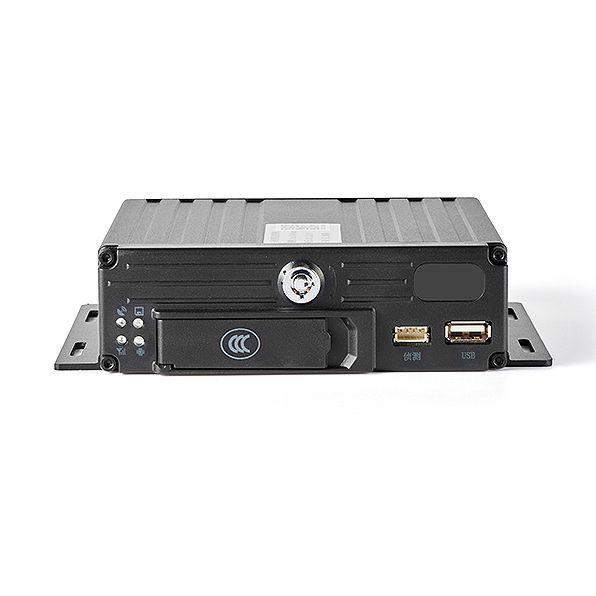
Make choices by matching capabilities to operational objectives: if you need reliable local recording plus telematics-triggered uploads, favor an industrial 4-channel DVR with H.265, secure storage, CAN/NMEA inputs, dual-SIM cellular support, and remote management APIs. If your workflow depends on edge analytics and flexible camera selection, pick an IP-capable platform with strong thermal and vibration ratings. Balance procurement against lifecycle costs and integration effort; a supplier that documents APIs and supports fleet incident workflows reduces field friction. For a pragmatic blend of stability and telematics alignment, consider partners and solutions that have proven deployments across fleet operations and can hand you the integration points you actually need—look for that practical compatibility when you evaluate vendors like BSJ.