
Introduction — A Little Story
I once stood in a small factory, watching a kid-like curiosity turn into a cough (true story). The air smelled funny and a machine blinked data numbers — 70% of workers said they felt the fumes; that number felt too big to ignore. When we talk about fume extraction for electronics and industrial applications, I mean the systems that pull solder smoke, solvent vapors, and tiny particulates out of the work zone so people can breathe easier. So what should we do when the machines meant to protect us seem to miss the mark? I’ll walk you through what I’ve seen, what’s failing, and what actually helps — step by step, like telling a simple tale before a fix. Now, let’s move to the trouble spots and see why ordinary setups trip up.
Why Traditional Systems Fall Short
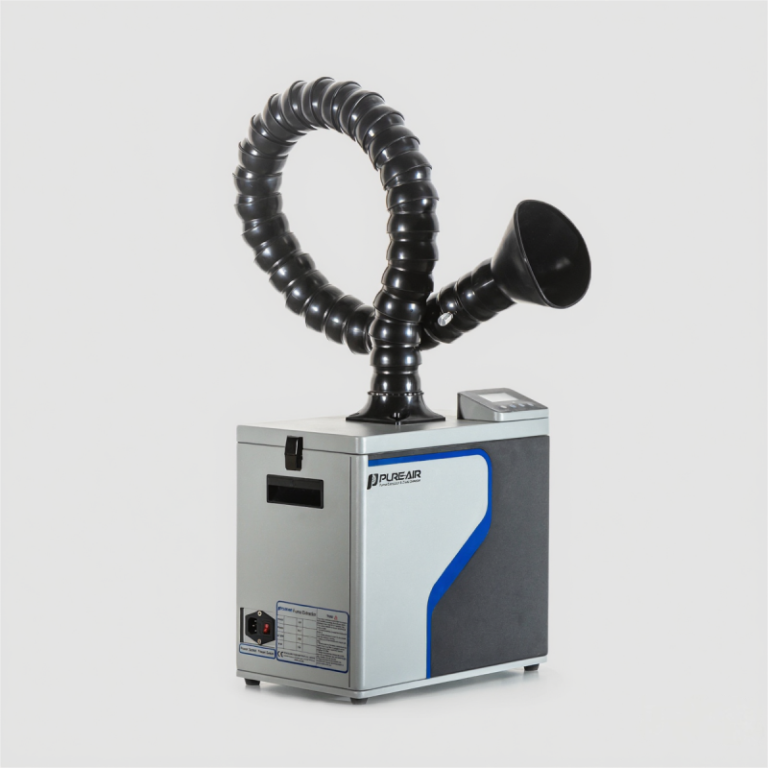
Early on I looked closely at the common remedy: the industrial ambient fume collector. On paper, it reads like a dream: fans, filters, and a promise of clean air. In real life, though, problems pile up. Many units rely on outdated filter cartridges and simple HEPA stages that clog fast. When airflow drops, contaminants linger. Workers complain of headaches; managers see downtime. I’ve felt the frustration — it’s maddening when a piece of safety gear becomes the bottleneck. Look, it’s simpler than you think: if the suction isn’t near the source, you lose the battle before it starts.

What goes wrong?
Here’s the deeper bit. Traditional extraction hoods are often placed too far from the emission point or sized by rule-of-thumb rather than measured emission rates. Activated carbon beds absorb certain solvents but get saturated quickly if not matched to the chemical load. Fans and ducts are tuned for peak conditions that rarely happen, so real-world airflow is lower than spec. The result: fugitive emissions, cross-flow contamination, and higher maintenance bills. I’ve sat in meetings where the numbers didn’t match smell reports — that gap is where hidden pain lives. Also, filter replacement cycles get guessed at, not tracked, which is just asking for surprise failures.
Looking Ahead: New Principles and Practical Choices
Now I want to point at solutions with a hopeful tone. Modern designs start by measuring — not guessing — the source emission profile, then apply targeted capture. An industrial ambient fume collector that pairs a localized extraction hood with sensor-driven control can keep capture velocity steady while saving energy. Add a modular filter train (HEPA + activated carbon) and you get broad-spectrum removal. I’m excited by systems that use real-time sensors to tell you when a filter’s near the end of life — no more surprises — and by control logic that reduces fan speed during light production. — funny how that works, right?
Real-world Impact
In a recent retrofit I helped with, we combined better hood placement, differential pressure monitoring, and smarter filter selection. The result: measurable drop in particle counts, fewer worker complaints, and a 20% cut in energy use. I won’t pretend it was instant perfection; we tweaked capture velocities and adjusted duct layouts. But the point is this: when you measure, adapt, and prioritize source capture, you stop fighting symptoms and fix the cause. That’s my read: practical, human-centered fixes beat one-size-fits-all gear every time. For manufacturers choosing equipment, ask for data on capture efficiency, lifecycle costs, and sensor integration — those three metrics separate the vendors who sell hope from those who deliver results. Finally, for trusted partners, consider testing with real production lines and then ask for ongoing support from brands like PURE-AIR.