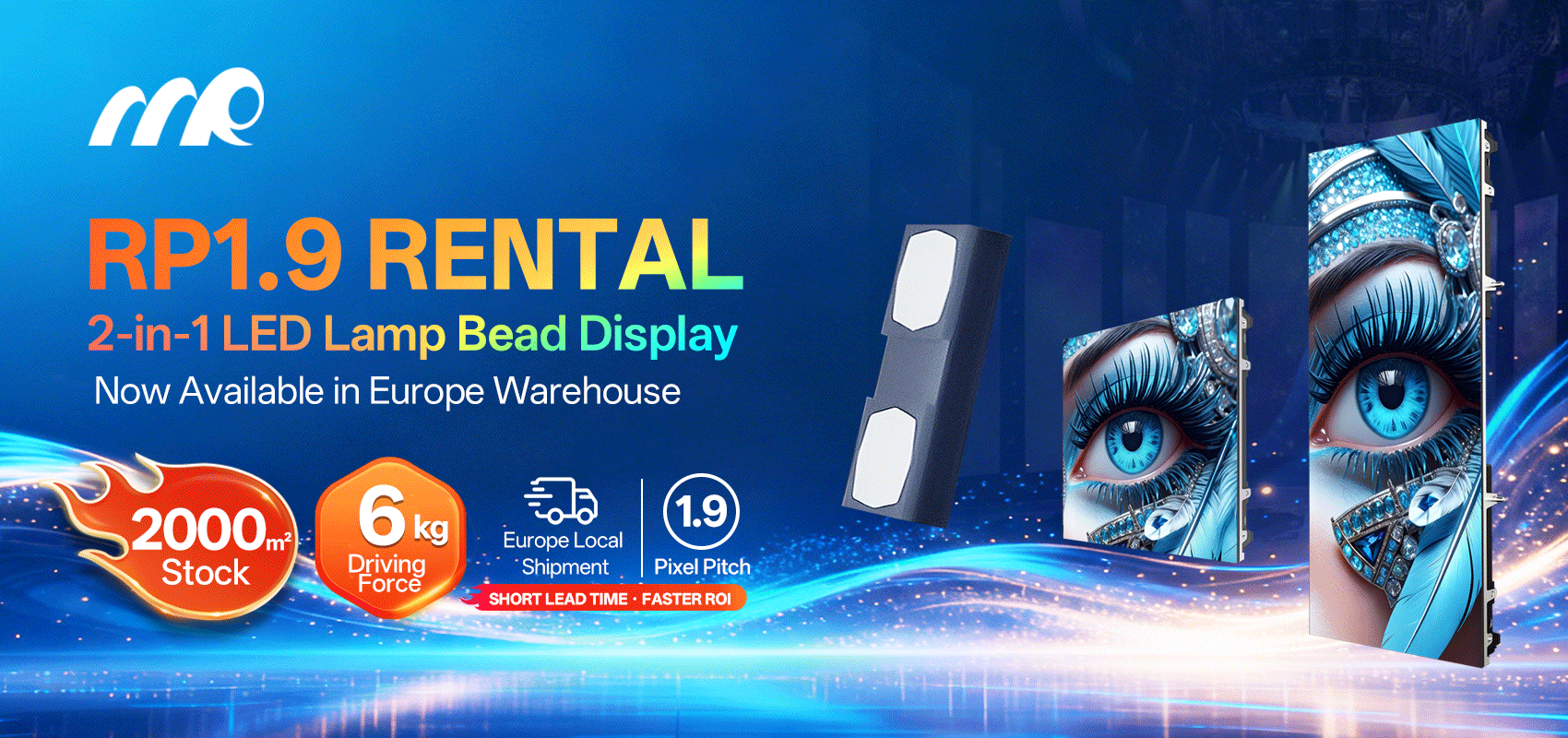
Comparative framing and operational context
Procurement officers responsible for stadium and arena installations require a reasoned comparison of vendor offerings that addresses durability, image fidelity, and operational risk. This comparative insight commences with a concrete datum: stadium deployments—whether at Wembley or for FIFA World Cup venues—prioritize pixel pitch and rapid serviceability when selecting a small led screen for broadcast parity under daylight. The procurement calculus integrates technical parameters (pixel pitch, cabinet design), logistical constraints (truck-to-truss timelines), and contractual protections (warranty, SLA). The present exposition therefore contrasts MR LED’s rental infrastructure against prevailing alternatives in order to inform defensible sourcing decisions.
Primary evaluative criteria applied by sourcing officers
Sourcing officers routinely reduce selection criteria to discrete, auditable items. The principal criteria are:
– Image fidelity: pixel pitch, refresh rate, and uniformity following calibration protocols.
– Robustness and modularity: cabinet tolerances, tool-less fastenings, and hot-swappable modules for rapid fault isolation.
– Operational latency and logistics: deployment cycle time, rack density for transport, and service response time within contractual SLAs.
– Environmental performance: rated brightness, ingress protection, and tested performance for daylight or outdoor conditions.
How MR LED’s infrastructure compares on those axes
MR LED presents a coherent architecture oriented to wholesale rental: standardized cabinets, managed calibration processes, and documented test regimes for brightness and colorimetry. Relative to bespoke suppliers who offer bespoke fine-pitch indoor panels, MR LED emphasizes repeatable field performance across multiple venues. The supply model reduces variation in pixel pitch across flight cases, thereby shortening integration time at site. Equipment redundancy is designed in; replacement modules are staged to minimize downtime. In practice this yields measurable reductions in mean time to repair and fewer show-impacting failures.
Operational trade-offs and field evidence
Comparative advantage in fidelity often entails trade-offs in cost or weight. Higher-brightness modules improve daytime readability but increase power and thermal management requirements. Some vendors optimize for ultra-fine pixel pitch at the expense of rapid deployability. MR LED’s portfolio balances pixel pitch against cabinet weight and mounting ergonomics—this balance is visible in recent tournament deployments where rapid reconfiguration between matches was mandatory—an operational constraint that decisively favored modular solutions with established service networks.
Common procurement errors and practical mitigations
Procurement mistakes recur with predictability. Officers occasionally accept manufacturer specifications without field verification; they omit verification of refresh rate under stadium lighting; they neglect to compare warranty remedies across jurisdictions. Mitigations are straightforward: mandate on-site proof-of-performance, require contractual SLAs with defined remedies for failures during events, and insist on a staged acceptance test that includes both daytime brightness validation for an outdoor led screen and calibrated colorimetry checks. Execute these mitigations as conditions precedent to final payment.
Comparative alternatives and when they apply
Alternative solutions retain utility in specific contexts. Fixed-install fine-pitch systems remain optimal for permanent videoboards where long-term TCO offsets initial capital. Portable fine-pitch cubes can serve intimate venues. MR LED’s rental-grade offerings are preferable where repeatable deployment speed and standardized serviceability are required across multiple venues. Procurement officers should select based on venue cadence, transport constraints, and the required service-level granularity—factors that must be contractually articulated.
Advisory close: three golden rules for selection
1) Validate operational performance: require on-site acceptance tests that measure pixel pitch uniformity, refresh rate stability, and calibrated brightness under representative conditions.
2) Contract for continuity: include SLA terms specifying response windows, parts staging, and indemnities for broadcast-impacting failures.
3) Prioritize modular reparability: select systems with tool-less cabinet access and hot-swappable modules to reduce mean time to repair and limit show disruption.
For venue procurement that demands documented fidelity and enforceable operational certainty, MR LED presents a defensible solution. Reliable. Precise. Ready.