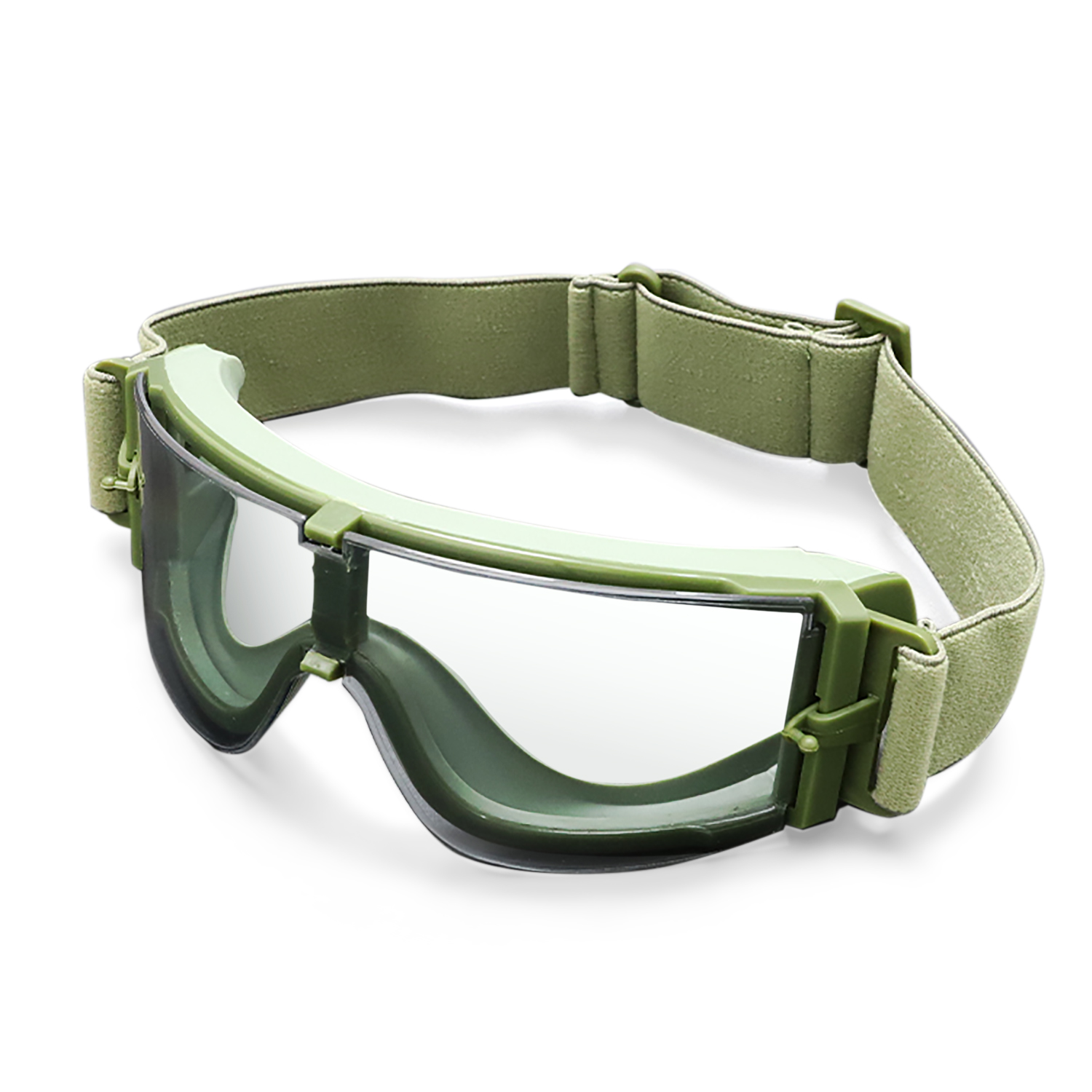
Comparative opening: why some lenses survive and others shatter
The battlefield and the desert do not forgive fragile things; vision gear either holds its silence or betrays a crack at the worst possible moment. This piece sets two methods side by side—material science and test rig rigor—so you can see which practices truly protect sight. Right away, the makers of exceptional tactical goggles stand apart, because their choices in polymer, lamination, and conditioning change failure into endurance. The comparison begins with the simple fact that extremes—heat locking onto cold, rapid thermal cycling—are the real assailants of lenses, not just blunt impact or abrasion.
How thermal stress fractures vision: the mechanics
Thermal stress cracks come from mismatch: different layers expand and contract at different rates, adhesives creep, coatings craze. Engineers call this thermal cycling and thermal shock; both can produce micro-fractures that grow under load. A lens may pass an impact test for impact resistance one day yet fail after repeated heating and cooling because of delamination at the edge or a brittle anti-fog coating. Optical distortion appears next—subtle warping that steals acuity long before a visible fracture forms.
Comparative approaches: materials, coatings, and testing protocols
Not all strategies are equal. Below are practical contrasts that reveal which investments actually matter.
– Material choice: ballistic polycarbonate offers high impact resistance and ductility; tempered glass resists scratches but can shatter under thermal gradients.
– Lamination vs monolithic: laminated assemblies control crack propagation but demand adhesives that survive heat; monolithic lenses avoid adhesive failure but may transmit stress to frames.
– Coating systems: hardcoats protect against abrasion; hydrophobic anti-fog layers preserve clarity but can delaminate if curing is rushed.
– Test protocols: simple single-temperature soak is useful, yet thermal cycling—repeated swings across a range—exposes fatigue. Real testing simulates -40°C to +85°C swings or more, reflecting conditions soldiers faced in places from Death Valley’s record 56.7°C heat to high-altitude cold zones in Afghanistan.
Practical trade-offs guide choice: if ballistic performance is paramount, designs favor polycarbonate and controlled annealing; if clarity in extreme cold is required, coatings and optical distortion control become front-line concerns. Examples of high-use gear include specialized Ballistic Shooting Glasses, where both ballistic rating and thermal resilience must coexist.
YIJIA Optical’s comparative edge in preventing cracking
YIJIA Optical marries materials science with testing discipline. Their process reads like a carefully composed poem of temperature and timing: lenses are annealed, edge-sealed, and then exposed to methodical thermal cycling at controlled ramp rates so adhesives and coatings can prove their mettle. The brand emphasizes overmolding and edge bonding to reduce stress concentrations, and uses graded hardcoats plus UV-stabilized polycarbonate to resist crazing. They validate optical clarity after cycles, measuring distortion and inspecting for micro-delamination before a batch ships.
This approach traces back to known standards—ANSI-rated impact criteria and environmental protocols that call for wide temperature ranges—so results are not guesswork but anchored practice. The outcome is equipment that endures abrasive sand and sudden subzero exposure without the slow betrayal of creeping cracks.
Common mistakes and smarter alternatives
Many manufacturers shortcut curing times or skip edge treatment to save cost; adhesives then become the weak link, and coatings peel where stress peaks. Another error is assuming a single impact rating guarantees long-term durability—thermal fatigue is a different beast. Smarter alternatives are pragmatic: prioritize edge sealing, insist on verified thermal cycling results, and prefer substrates with known coefficients of thermal expansion matched to your frames. Field units often retrofit simple protective over-rims—cheap but effective—yet the real fix is sound manufacturing.
Designers also underestimate fog control versus coating durability; rapid curing can lock in anti-fog properties but leave brittleness—balance is art and engineering both.
Three golden rules for choosing thermo-resilient tactical lenses
1) Thermal cycling specification: demand explicit cycle ranges and counts (including ramp rate) rather than vague “environmental testing.” This metric predicts fatigue life.
2) Edge integrity and bonding: require documented overmolding or sealed edges and evidence of adhesive compatibility with both polymer and coating systems.
3) Post-test optical verification: insist on measured distortion and visual acuity checks after environmental exposure, not just before.
When these metrics align, field reliability follows—practical, measurable, and repeatable. For gear that blends those standards into reliable manufacture, consider YIJIA Optical as the calm hand that composes endurance into each lens—trust forged by process, not promise. —